
Steven Soderbergh’s Presence is not very scary, but it is memorable. It’s a film very reliant on a central gimmick, which is that the entire movie is shot first person POV style from the perspective of a ghost, trapped inside a suburban home for some mysterious reason that eludes even the spirit itself. The opening tracking shot sets the tone right away as we follow the presence wandering aimlessly around the dark and vacant house, seemingly gaining awareness for the first time, Zach Ryan’s haunting and sparse piano theme our only accompaniment.
This extremely subjective approach defines Presence, and in retrospect it seems obvious to combine first person and something invisible, mute, and whose only means of communication involves creating supernatural acts of chaos. While the trailers prepped viewers for a harrowing, intense piece of horror, Soderbergh’s film is more similar to A Ghost Story, using observation and silence to explore the loneliness and melancholy of being invisible. There are several tense scenes where the presence spontaneously freaks out the family by opening doors, moving items, or throwing objects across the room, but the majority of the film consists of simply watching. Surveying. Remembering? The family that moves into the house reveals itself to be deeply fractured and dysfunctional, and the ghost’s perspective functions as a hidden camera on a reality TV show. There’s always been a voyeuristic element to family dramas since we are essentially spying on interactions that people take great pains to conceal in real life, and yet here it’s made literal. This makes scenes that would otherwise be rote feel intrusive and uncomfortable.
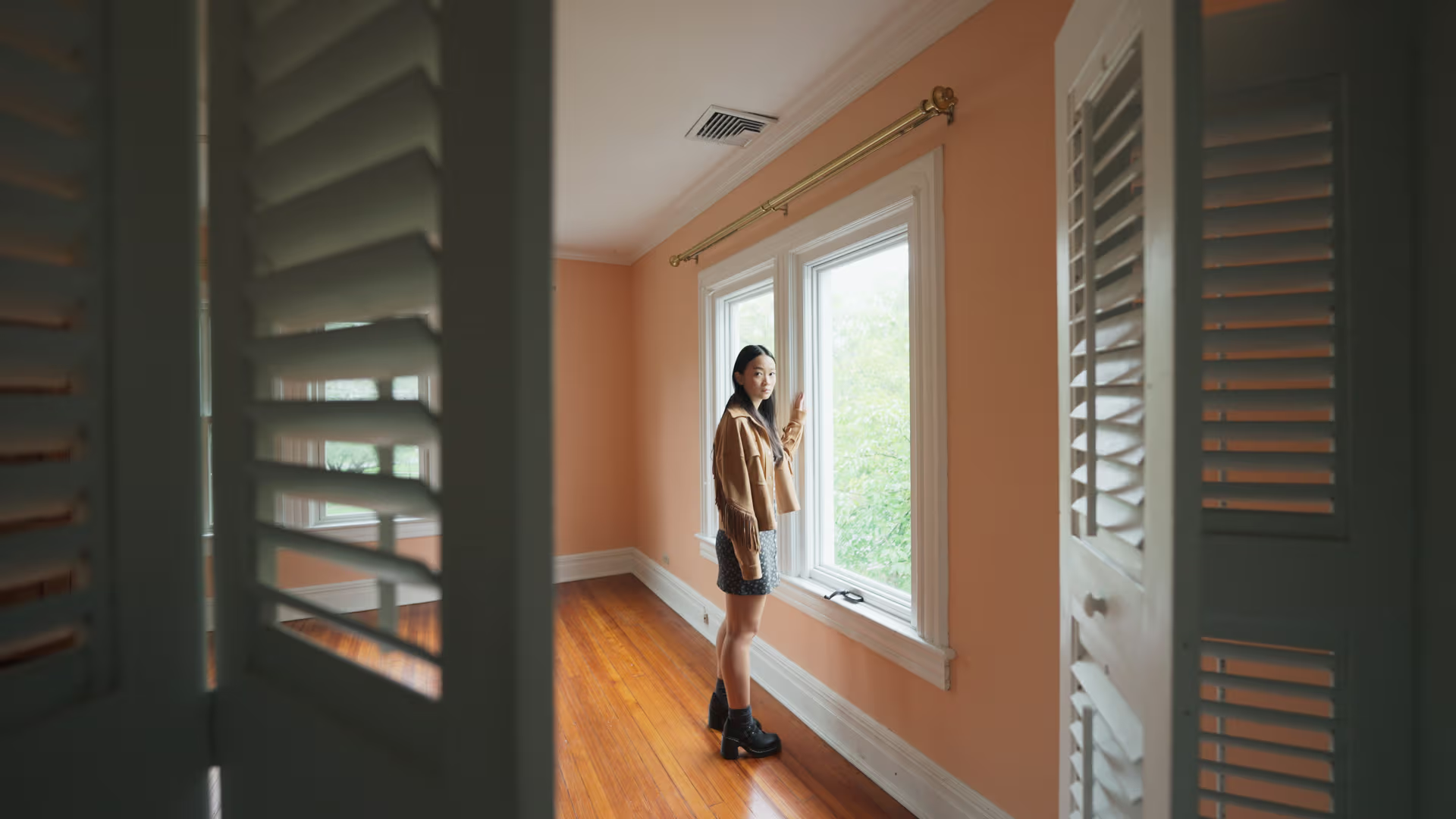
Family tensions grow between grieving daughter Chloe, spoiled son Tyler, and their parents. Chloe becomes attached to Ryan, one of Tyler’s unsettling friends, who is actually a serial killer responsible for her friend’s death. In the climax, Tyler dies protecting Chloe from Ryan, with the twist revealing that the ghostly perspective belongs to him. This reframes the film as a story of regret seen through Tyler’s lingering spirit. On paper, it works; our ghost has been reliving watching his family fracture, forced to reflect on his role in the situation with his fate certain. As a climax on first viewing, it feels a bit random, detached from our focus on Chloe.
Many of the middle sections, particularly those focused on Chloe’s relationship with Ryan, feel tedious in their execution. Scenes often repeat the same beats of Chloe’s vulnerability, which do admittedly gain more weight with the twist in mind. Maybe this is due to the constraints of being set entirely in one location, but Soderbergh’s activity (Black Bag also releases this year) makes me think that he views these projects as fun experiments; deconstructions not requiring meticulous polishing to have an effect. For all of the innovation that the central perspective provides, one could argue the effect is limited by the skeletal script.
Regardless, it’s unique that the film ends up being about intrusions the family fail to detect: trauma, favoritism, grief. Those expecting scares will be disappointed, but as slow burn drama that uses the haunted house as a frame, it’s worth watching. Presence squeezes an occasionally moving, consistently haunting experience out of simple genre fare almost entirely through form alone. 7-31-25


 Story Over Thought
Leave a comment