
Die My Love is a difficult movie to watch. Director Lynne Ramsey has always explored the brutal realities of life in her films, but her latest exemplifies another career-long trait: a tenuous connection to reality itself. Combining these two means that even when we do understand what’s happening, we might wish we didn’t. What’s that? Did J Law just murder the family dog?
Grace (an electric Jennifer Lawrence) struggles with postpartum depression after starting a family with Jackson (a deer-in-the-headlights Robert Pattinson), in rural Montana. Gradually, it becomes clear that she is also experiencing psychosis. Grace’s subconscious fears, fantasies, and dreams pour out of her with little rhyme or reason, leading to some truly disturbing moments (playing with a knife around her child, throwing herself out of a window, dog murder) but also scenes of black comedy (crawling around like a cat, screaming about Jackson’s inability to pleasure her, did I mention she murders a dog?). The second half of the film reveals a recurring pattern of Grace recognizing that she is spiraling and sharing a laugh about her episodes before crashing out even worse, which is, in my opinion, a very accurate portrayal of mental illness—even if it makes for an arduous first watch.
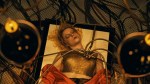
With Jackson at work for most of the week, Grace’s life is filled with boredom and monotony. The spontaneity that once characterized the beginning of their relationship has faded. This sense of dullness is mirrored in the impressionistic sound design, which features barking, flies buzzing, and a record player that skips and plays the same song over and over. There are dreamlike sequences that suggest Grace may be having an affair with a neighboring biker, although it’s unclear whether these are real or merely fantasies. One interpretation is that many of these sequences represent what is being written in Grace’s book, which we never see her actually writing (there is a potentially telling shot of milk from her lactating breast mixing with ink on a blank page—yes, really).
Infidelity from Jackson is also hinted at but similarly left ambiguous. Regardless of what exactly is happening, a tension develops between the two as Grace’s depression worsens. Early on, the couple has a conversation while stargazing, during which Grace confesses that she doesn’t like looking at the stars because she fears it makes her feel “like nothing.” Ramsey suggests that looking around at her new husband, house, and child elicits the same feeling, a complicated sentiment that is also reflected in the film’s title.
This is not to suggest that Grace doesn’t love Jackson or her child, but it could also be said that a cat loves its owner. The film features numerous examples of animal imagery to symbolize the freedom Grace craves, such as her habit of crawling on all fours, or the black horse that appears majestically at night, only to be violently struck by Jackson’s truck in daylight. At one point, she gazes lazily out a window and licks it. Comparing the nuclear family to domestication may not resonate with everyone, but this is a film about insanity, after all (Die My Love holds an abysmally low D+ CinemaScore—somehow an improvement from Lawrence’s turn in Aronofsky’s mother!, which famously earned an F).

Speaking of which, those around Grace have noticeably muted responses to her struggles. She is continually reassured by her mother-in-law, Pam, that what she is experiencing is typical for mothers and that everyone has some difficulties after having children. Jackson is convinced all she needs is a little time to herself. Rather than comfort Grace, this seems to disturb her even more; that an experience so unsettling could be typical and expected, and just as easily forgotten. The film’s incendiary ending, in which Grace walks off dramatically into a forest fire that she herself started, is a metaphor for being consumed by her own primal desires and impulses (there is a shot of the fire at the very beginning when Grace and Jackson first move into the house, where they immediately make love).
Ramsey’s strength has always been unpredictability, from her unlikely protagonists to her unusual narratives, but she usually finds a stronger plot to experiment inside of. Even though her recent films are also subversive and experimental, they still employ genre structure (i.e., We Need to Talk About Kevin as a psychological thriller, You Were Never Really Here as a neo-noir). Die My Love has comedic and dramatic elements but is overall more of a freeform spiral into insanity.
One longs for a tighter and more economical edit—a version of the story that more succinctly explores Grace’s struggles without so much redundant misery. I think more comedy would have also helped, especially since Pattinson and Lawrence riff off each other so well. But although Ramsey rarely matches Lawrence’s intensity with a tangible narrative, the film’s meandering volatility is what makes it unique—and the detachment mirrors the disassociation of its subject. There’s probably a better, leaner version somewhere in the editing room, but there’s just as likely 1,000 versions that don’t work at all.
Like mother!, it’s a strange experience that is intentionally unsatisfying. Ramsey takes her oneiric instincts to a new level of obfuscation, resulting in a challenging but never uninteresting dive into mental illness and motherhood. It’s unfortunate that the film’s bleak conclusion will likely alienate most viewers, but to be frank, so will most everything before it. As the film itself explores, reality is often brutal. 11-10-25


 Story Over Thought
Leave a comment