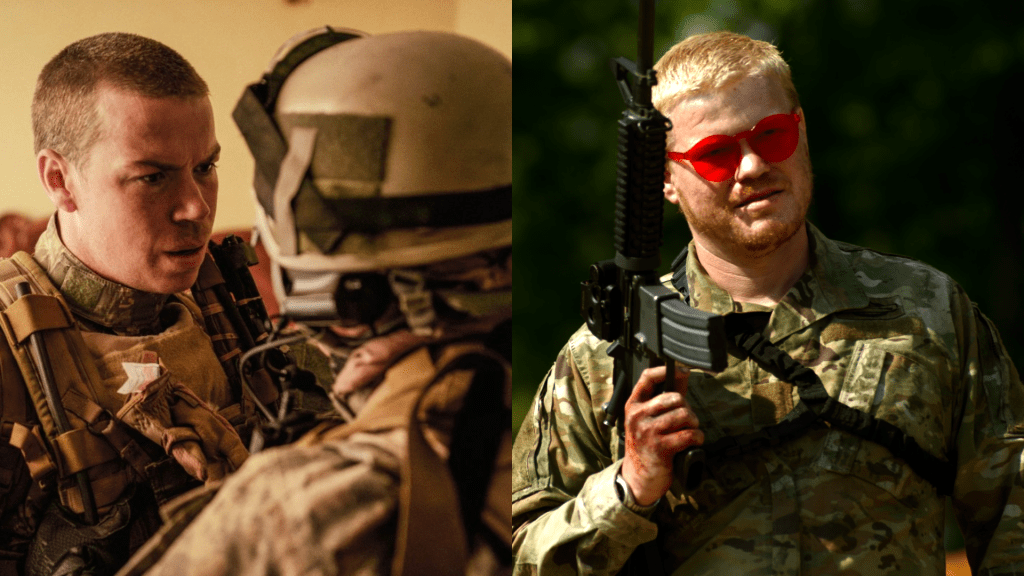
Last January, I stumbled out of the theater after watching A24’s Warfare, a little dizzy and a little dehydrated, having declined to pay six dollars for a Dasani. As I made my way toward the exit, a fellow patron from the screening caught up to me, wide-eyed and smiling.
“What’d you think?” he asked. Then, without waiting: “Dude—wasn’t that great?”
Great was an odd word for what we’d just seen. It was also, in some sense, very accurate.
“Yeah,” I said, already nodding. “That was great.”
This seemingly innocuous interaction stuck with me. In 2025’s Warfare, Alex Garland and veteran Ray Mendoza deliver one of the most brutal ninety-five minutes ever put to screen. What begins as a tightly wound thriller gradually unravels into a chaotic, real-time nightmare, following a group of Marines struggling to hold their position amid a sudden firefight during the Iraq War. It would seem that such an experience can only be making an incredibly obvious statement—war is hell—and yet Garland’s film proved to be somewhat controversial. Many critics argued that Warfare was the cinematic equivalent of a Call of Duty game; that it portrayed its protagonists as courageous victims, aestheticized professionalism under fire, and was yet another example of America making a film about how sad imperialism makes our soldiers. Perhaps the most damning and troubling indictment was the sentiment pervading the subtext in many of these reviews: that “war is hell” is no longer a statement worth making.
The irony of such a phrase should be obvious, but it isn’t anymore. America has crept closer and closer to civil conflict in the past decade, and there is a growing sentiment on both sides that it might be inevitable. Garland, a Brit and an outsider, sees this with unusual clarity. Warfare is a film uninterested in the causes of its death and destruction, only in its visceral effect when it arrives, an attitude that leaves it vulnerable to contrasting interpretations. But many forget that this is actually Garland’s second attempt at exploring the practical reality of physical conflict: Warfare is a less complicated, more blunt recreation of a film he made a year prior, 2024’s Civil War; the same potent thesis, diluted even further.
If Warfare is a glimpse into the past, Civil War may eventually be seen as a snapshot of the future. Upon release in 2024 there was a lot of back-and-forth about whether or not the film suffered from being apolitical, but much less discussion about how a theatrically (and IMAX) released mainstream summer action film ends with an assault on the White House, and with the sitting president being summarily executed, his corpse the centerpiece of a haunting and gruesome photo that stays onscreen throughout the end credits. The question raised over and over was who was right or who was wrong (questions raised in real life about the war Warfare recreates), but why? It shouldn’t be in anyone’s interest to see our country descend into a state where the “good” ending is what we see in Civil War, except as the very last resort, but it’s an obvious conclusion that seems to be taken for granted. And the fact that such a statement is controversial only speaks to how far we’ve gone down the path of us vs. them and how deeply this concept is integrated into most of our lives.
Of course, many see this as enlightened centrist no-siding, but that isn’t the case. It’s just that choosing one within the film makes Garland’s point obsolete. If you can’t watch Civil War and accept that California and Texas could ever agree on anything, then that should chill you to the bone. Because Garland’s larger statement here, the one less discussed, is about our diminishing fear of conflict. Violence no longer feels abstract to us, nor does it feel unthinkable; it feels imaginable, debatable, and increasingly, acceptable.
There are a few misconceptions to understand about Civil War. First, this is not an apolitical film. The President is a fascist tyrant serving an illegal third term, someone who kills journalists on sight and broadcasts his own false narrative in their stead. The inclusion of these details is very intentional (as is Nick Offerman’s portrayal), as Garland’s leftist politics clearly inform his work. Halfway through the film, a rogue soldier played by Jessie Plemons stands beside a mass grave and asks a group of characters, “What kind of American are you?” When he hears that one of them is from Hong Kong, he immediately shoots the man dead. In the wake of recent real-life tragedies, this scene continues to linger in many minds and circulate on social media. Some seem uninterested in grieving a death until, indeed, we find out what kind of American they were.
However, Garland does not necessarily see the conflict as purely left vs. right, because he makes a point of telling us the Western Forces are red and blue states fighting in unison. Many have viewed this detail as a huge mistake, since fascism is generally rooted in far-right politics. However, the start of the fictional conflict is no mystery. Garland’s hope is simply that the majority of Americans are not consciously fascist, a belief I also share. More importantly, this detail tells us this is a film intended for all of America to watch, something that is actually fairly unusual in mainstream Hollywood.
Second, Civil War is firmly pro-press, even though it explores the role of war journalism with nuance. Detractors are correct when they say Garland’s film is designed to remove crucial information that would keep most viewers from being able to “pick” a definitive side between the various armies, successionists, and rebels, but it is a mistake to view the film’s exploration of violence and its corroding effect on the soul as an indictment of journalists, which couldn’t be further from the intended message. In the shoes of the press, we realize there is a discomfort that emerges from encountering an image without a handy caption. Thinking for yourself isn’t easy.
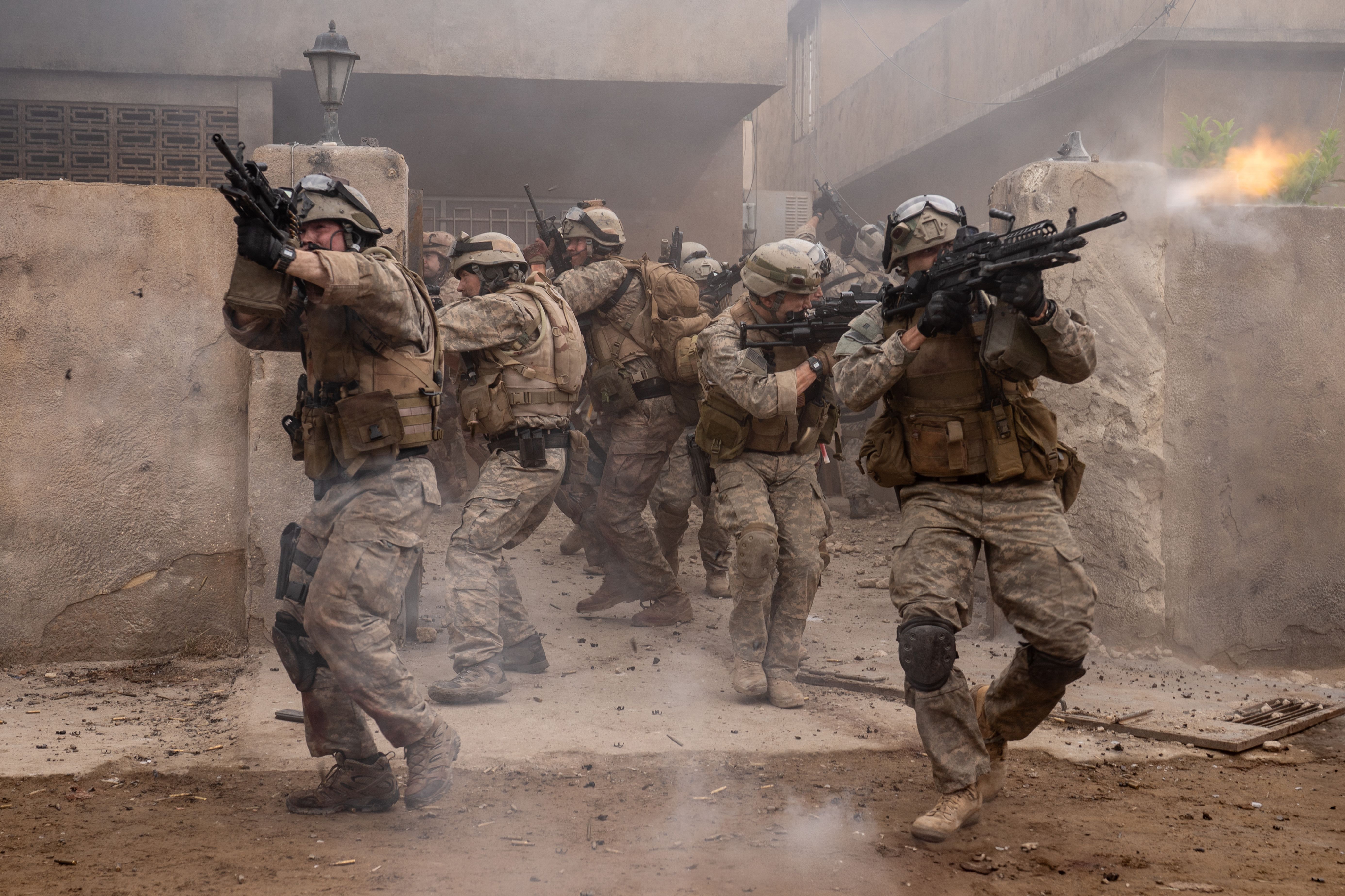
Warfare, by contrast, tries to be apolitical and isn’t really pro anything, except humanity. In practice, of course, this isn’t necessarily true; choosing to focus on Americans over the Iraqis is an inherently political act, even if the intent is to focus on a group that will put domestic butts in seats, not to deliberately exclude. But perhaps filmmaking could be compared to journalism and the ideal of objectivity, where, yes, framing a shot involves choosing what to focus on while cutting out something else. But something truthful is still captured within the frame.
Warfare captures the horror of war like never before by focusing on a real-life event with as little Hollywood embellishment as possible. In a way, Mendoza is the subject and Garland is the camera, trying to capture the subjectivity of a combat vet’s memory without pesky character development or plot twists muddying the waters. It is no coincidence that Warfare is the definition of a horror film, where any and all “entertainment” comes from wondering what gruesome visual we’ll be subjected to next. There are no satisfying headshots or grand fetishization of jingoistic bravery. Mendoza’s experience is a swirling vortex of confusion, trauma, and radio chatter, and the only resolution is retreat. Joseph Quinn’s Sam has his legs ripped to the bone and spends the entire movie lying in a pool of his own blood, assigned maybe three lines that aren’t shrieks of pain. Will Poutler’s Erik is badly concussed and dissociates before relinquishing command to the platoon that saves them. A new question seems to arise: shouldn’t we question why a combat vet’s memory of patriotism, one focused on legitimacy and accuracy above all, perhaps the least sensationalized war movie ever, is as unapologetically grueling and hideous as this?
If one listens to any interview with Garland, he makes his stance clear: reporting is a necessary and heroic part of any society. Seeing bad things is important. When he first came up with the idea for Civil War, a friend warned him it was a bad idea for a movie because no one likes journalists. This struck Garland as an incredibly shocking thing to say. While cable news corporations and influencers are a separate conversation, the actual reporters—the people risking their lives to keep us informed, to provide checks and balances for our leaders—should be respected. The strange truth is that journalism is not necessarily hated, but increasingly ignored.
This distinction matters, especially in a moment where vilifying the “media” has metastasized into something much broader than simple distrust. Many people no longer want to be told what to think by anyone not aligned with their beliefs, even one ostensibly devoted to observation. Objectivity itself is treated with suspicion, as though refusing to provide some sort of commentary is a form of manipulation. But the vacuum left by this distrust is quickly filled by partisan influencers, algorithmically rewarded for reframing reality into something easier to digest and much easier to weaponize. Both of Garland’s films refuse to tell us how to feel, even as audiences increasingly demand to be told who to root for. But the tension this creates is not a flaw.
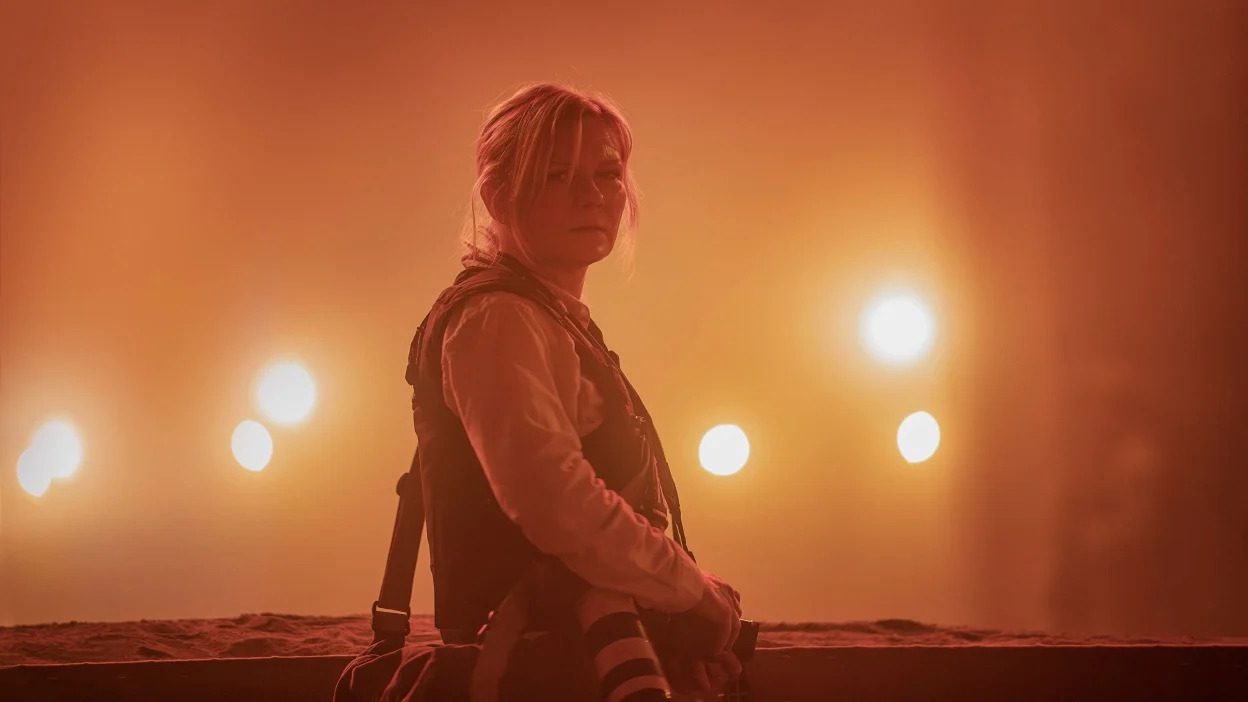
Look at the protagonist of Civil War. Kirsten Dunst’s Lee is jaded and bitter, but also a noble character in an impossible situation. Making Lee a war photographer specifically is a stroke of genius because she is actively trying to avoid imposing any narrative or meaning on her photos. She wants (or wanted) to believe that the message they carried was self-evident. She represents a fading form of reporting, one that still clings to objectivity above all. Lee laments that every time she survived a war zone, she thought she was “sending a warning home.” But here she is again, in a situation worse than ever before. The implication is devastating: the warning was received, but no longer feared.
Lee also says that “once you start asking questions, you can’t stop. So we don’t ask. We record so other people ask.” While this statement may seem sensible at first, if we take a moment to actually understand what she is saying, we realize that journalists and reporters who cover atrocities are asked to detach themselves from humanity for the sake of documenting the truth. Turning a blind eye to barbaric violence and pointless bloodshed goes against every natural instinct we have. When Lee saves Jessie at the beginning of the film, it is the first hint that she is still suppressing her humanity. After the death of her mentor, Sammy, it begins to spill out, and she has a panic attack during the climax. The image of Sammy’s death has done its work.
This is because violence does not choose what it corrupts. In Warfare, war scars the soldier, the perpetrator, and even the viewer. The soldiers suffer brain damage, mutilation, and attempts to communicate are drowned in a constant hum of gunfire that leaves our own ears ringing as well. In Civil War, war damages the psyche. Joel, for instance, is someone who’s become aroused by the thrill of chaos and the heat of battle as a way to cope. During the violent attack on the Lincoln Memorial at the end, he looks over at Jessie, and the two smile, thrilled to be the ones witnessing this desecration firsthand. As the soldiers storm the White House, the three journalists are indistinguishable from the soldiers, “shooting” their cameras from cover, putting their lives on the line to reel in the big one.
When Jessie photographs Lee’s corpse at the film’s end—mere seconds after Lee saved her life—the image is deeply arresting. Though an act of great callousness, Jessie is merely following in Lee’s footsteps, committed to capturing the truth at any cost. Garland suggests that, within such a dehumanizing situation, this is the natural conclusion of what we ask journalists to do. If images no longer carry moral weight, then capturing them becomes just as heartless as the act. This is exemplified in the ending, where Joel briefly stops the soldiers from killing the president, but not to stop their summary execution. To get his headline. “Don’t let them kill me,” the President pleads. “Yeah. That’ll do,” Joel says monotonously, stepping away.
In a photo that develops as the credits play, the deceased president is surrounded by WF soldiers, posing and smiling enthusiastically for the camera. The haunting photo is reminiscent of something we’ve seen countless times in the Middle East, but now it’s in the White House. Such a photo is intended to show us the natural conclusion of a country divided on nearly everything. This is what we mean when we say we’re willing to die for our beliefs. It is an image designed to horrify, yet it arrives in a culture already saturated with horrors.
Many viewers will watch the photo develop over the credits of Civil War and, consciously or not, create a narrative that supports their worldview: perhaps we’ve watched a tyrant overthrown, or perhaps we just watched the United States reduced to a third-world country. Both can be true. The Western Forces are not necessarily the “good guys,” per se, as while toppling an authoritarian regime is a necessary act, it is also done in this film by committing war crimes such as murdering the unarmed. That this shot will be immediately absorbed into competing narratives is precisely why it can’t tell the whole story. An American audience accustomed to constant images of war—conflict in Gaza, Ukraine, police violence, etc.—is already conditioned not to recoil, even when this image is placed in the Oval Office of all places.
This problem is not new. In fact, Garland screened the definitive anti-war film, Elem Klimov’s Come and See, for the cast and crew of Civil War before production. Come and See has long been praised for its unflinching and relentlessly graphic portrayal of war’s psychological and spiritual annihilation—an endurance test and a descent into hell that leaves both its protagonist and its audience irrevocably changed. And yet, nearly forty years after its release, war not only persists but proliferates, endlessly documented and endlessly justified. If Come and See represents the apotheosis of the anti-war image, then films like Garland’s should theoretically be obsolete. But they aren’t.
Certainly, some things are worth fighting for. A second Civil War would no doubt be fought over legitimate injustice, such as the one depicted in the film or the injustices this country actually experienced in 1861. However, by setting his film in what is ostensibly the present, Garland only allows us to consider the past as justification for the events we see. What issue is so grand that we would allow a president to abuse their power so severely that the red and blue join together to enact a bloody revolution? Why would we elect such a man to begin with? In a pivotal scene halfway through the film, Lee and the group come across a sniper dueling another in the middle of nowhere. When asked who is shooting at him, he doesn’t know, except that he’s being shot at.
Similarly, Warfare is the third act of Civil War zoomed in and stretched to feature length. It is about shooting and being shot at—not purpose, intention, beginnings, or endings—and it is most assuredly not exclusively about the loss of American life, as the only confirmed casualty in the story is a translator. The real-life soldiers present may have been there of their own accord, but the film refuses to comment on this; they may have had families, but so, too, does the man whose home they occupy, and so, too, do the Iraqi militants pointing guns back at them. There isn’t even a score, since music would be an addition not present in Mendoza’s memory. Warfare is practically a documentary, a movie that tells you exactly what it is on the poster and delivers nothing more and nothing less. Pure shock value.
The film’s credits also include photos, but of the real-life soldiers on whom the film is based, ensuring we understand that what we just witnessed happened to actual people, and if you’re American, to fellow citizens. Garland is effectively saying, “that could be you; this could happen.” But this is where comparisons to Call of Duty come full circle. Like Garland’s film, the games attempt to recreate the sensory experience of combat—the noise, the panic, the constant threat of death. The difference is not one of form, but of intention, and it’s difficult to definitively say their effect is not the same.
Call of Duty frames this experience as thrilling, empowering, and ultimately consumable. Warfare strips that same experience of pleasure, and yet, for an audience raised on interactive simulations of violence, the boundary between depiction and excitement has already been blurred. In a way, critics of Garland’s war films have a point. After all, what separates Warfare from White House Down or 13 Hours in the eyes of many? Garland (and I) might say it is the refusal to offer noble deaths or redemptive sacrifice, an omission that makes the film feel unsettling rather than inspiring. This memory was chosen as the basis for a film because the event itself proved meaningless, at least in the moment it was lived.
It’s also not true that portraying war as extraordinarily bad for soldiers equates to propaganda. Literally every line and beat in this movie is based on Mendoza’s memory. If we accuse the film of trying to look cool or aestheticize soldiers like a Call of Duty game, we have to realize that many Call of Duty entries themselves are trying very hard to be realistic. It’s not Warfare’s fault we’ve collectively associated flyovers with something “cool.” While both works aim to recreate reality, the viewer still has to bring their interpretation to the table, and realism is no longer a deterrent by itself.
Which is horrifying. Gazing down the barrel of a shotgun seems like it’d tell us war is hell without verbosity. But if you can reframe it to suggest the good guy is holding the gun, or better yet, that such an experience is an incredible thrill, all bets are off. That’s why narrative works. While Warfare tries its damndest to approximate reality, political leaders in the real world are busy telling you not to trust your eyes and ears. Of course, there aren’t any easy answers in either of Garland’s films because there aren’t any easy answers in real life. Unification requires compromise, patience, and reaching out when the time for reconciliation seems long gone. But it also requires a shared reality.
There is a reason why, during the climax of Civil War, the film often freezes shots and turns them into brief, black-and-white photos that flash on the screen. Like the war photographers in the film, Garland is sending us a warning that we can choose to ignore or take to heart. By staying objective as well, Garland wants you to take the horrors of violent conflict in these films at face value; to think critically about the practical reality of a human being displayed as a trophy, or an American citizen reduced to a crying, mangled mess.
French New Wave director François Truffaut rather famously said, “I don’t think I’ve really seen an antiwar film. Every film about war ends up being pro-war.” He can never be completely wrong, because now we understand that no portrayal of war could ever be seen as a collective deterrent. One wishes we could interpret violence as hideous simply by opening our eyes and observing the effects, but that’s not the case. We think about it differently until it arrives at our doorstep. If a picture is worth a thousand words, it should speak for itself; Alex Garland’s films recognize that it no longer does. 1-27-26



 Story Over Thought
Leave a comment