At some point, years and years of test screenings and studio feedback must take a little bit of your edge away. You could make the case that Christopher McQuarrie has always been a commercial filmmaker (one of the first conversations he had with Tom Cruise was an all-day discussion where they discovered their mutual desire to make movies that appealed to as many people as possible), but there has always been an attempt, of course, to make a good movie first. Rogue Nation, Fallout, and even Jack Reacher are action movies for people who love cinema. They all contain “real” action shot on real locations, twisty and kinetic stories inspired by 70s action cinema and Bondian globetrotting, and above all, a sense of being made with thrice the craft and care of something like the Fast and Furious franchise, to pick an easy target. A 2010s Mission: Impossible is the best kind of blockbuster: smart, stylish, and of course, pulse-pounding. At the time of this writing, Fallout remains the only film that’s literally taken my breath away.
Final Reckoning, by contrast, feels as if it were directed from audience notes. This is a film that fundamentally cannot be the crowd-pleaser it’s trying to be; the lore is too weird, and in spite of the series’ longevity and respectable financial success, the average moviegoer doesn’t care about these characters beyond Hunt, if even him (Cruise himself, and the promise of audacious stunt work, are the real draws). This apparent final entry is built on a foundation of egregious flashbacks and unforgiving exposition, making large stretches a real slog to sit through. McQ indulges in a montage of the old entries while Angela Bassett drones on about how cool Ethan is, and the Entity’s introduction in Dead Reckoning proved so disastrous that it shows up a single time to monologue about how evil it is, explain its plan, and disappear. I mean, hell, there is an entire subplot from the last film that was dropped in post because it, and I quote McQ, “it wasn’t working.”
That’s what truly bothers me about this film. While in service of a plot that is indeed appropriately large in scale, narratively, Final Reckoning simply doesn’t really feel very climactic at all. Hunt’s past and his life pre-IMF are possibly the most interesting things this conclusion could ever explore, and the fact that no small amount of backstory was written and shot but will forever remain unused is a travesty. This is a film about death and aging, and yet it rarely feels like it’s set in a realistic world where death can happen to anyone, or where people actually get old. Luther’s mysterious illness could be a terrific touch in a film interested in exploring it, but instead, his cliche demise via ticking bomb is overwrought and melodramatic. Likewise, Hunt’s penchant for defying death is pushed so, so far in this film that it risks taking you out of the experience completely. We’ve previously seen Hunt lose fights or need help in Rogue Nation and Fallout, especially, so Grace’s last-second rescue as he starts to drown in the Pacific Ocean does not feel realistic or fresh in a film where he is a few feet away from reaching the surface alone, and without his diving suit, no less. Cruise rocking a haircut that really doesn’t work past 40 is no great help, either.
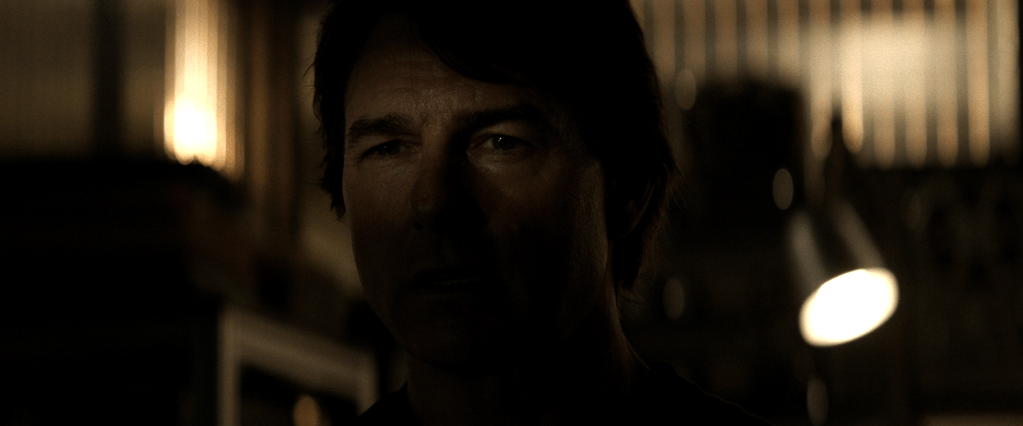
Which isn’t to say Hunt’s virtual immortality isn’t addressed yet again. Ethan enters the coffin-box of the Entity at his lowest and emerges with the most insane plan ever that somehow works. Did he die in there? Is Final Reckoning a metafiction about how true movie stars like Cruise are essentially dead but live on through their work? Through strange editing choices and recurring visuals of submergence and drowning, McQ plays around with the suggestion that the whole thing might be a death dream. But he never pushes it too far, because he can’t in a movie that is aggressively trying to make a billion dollars. It leaves the more impressionistic touches in a strange middle ground where they only make the story seem more disjointed instead of unique.
It may sound like I’m asking too much of a big summer tentpole popcorn movie, but when we’ve asked for more from this franchise before, we’ve often received it. Fallout is my pick for the best action movie ever, and not only was it the most relentless adrenaline rush since Fury Road, a feverish rollercoaster of hand-to-hand martial arts, a HALO jump, and chase sequences by car, motorcycle, foot, helicopter, and boat, it was also a slippery spy thriller that doubled as a character study. But though I find it disappointing that Cruise and McQuarrie dropped the ball on concluding one of my favorite franchises with another 10/10, it’s not a complete surprise. Past Missions have written the book on how to keep blockbusters tight and focused, but Final Reckoning finally reckons with the issues already present in the last one, which screamed: “We don’t actually have a script here.” Dead Reckoning: Part One is a decent film overall, but what many suspected back in 2023—that Gabriel, the Entity, and the larger story were still being workshopped upon release—is now all but confirmed.
And that’s okay, of course. The generational run that this series achieved with Ghost Protocol, Rogue Nation, and Fallout is written in stone, and while it’s important to realize no filmmaker is infallible, lest we celebrate something based on goodwill from previous work or the simple fact that we like them, Cruise and co do deserve a little leeway after so many bangers. It’s no secret that McQ has been making these movies by the seat of his pants for years, without completed scripts or a clear sense of where the story would ultimately end up, and it was only a matter of time before such an approach would come across onscreen. The much more uncomfortable truth might be that these films actually aren’t all that far from a Fast and the Furious when none of those good intentions come together.
It is also, as mentioned, a simple fact that McQ is a company man who wants to produce a hit and uses test screenings to shape his films in post-production. I’m not suggesting that’s a bad thing in itself, but I do think doing nothing but improvising Mission: Impossibles for over a decade would wear anyone out. Maybe even result in a Frankenstein’s monster like we ended up with here—where McQ is actively going against most of his instincts in an effort to deliver something that’s a direct sequel to an already flawed film, a capper to a twenty-five year old franchise with very little story, a monumentally large action epic that has action sequences that will need to be planned months in advance, and yet still accessible to as many casual filmgoers as possible. Big-budget movies need a big audience to make money.
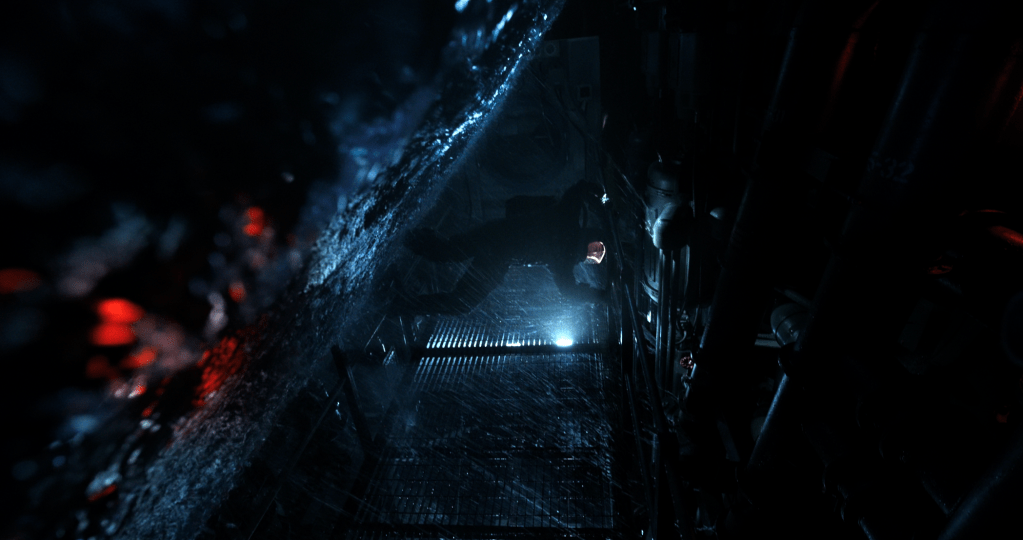
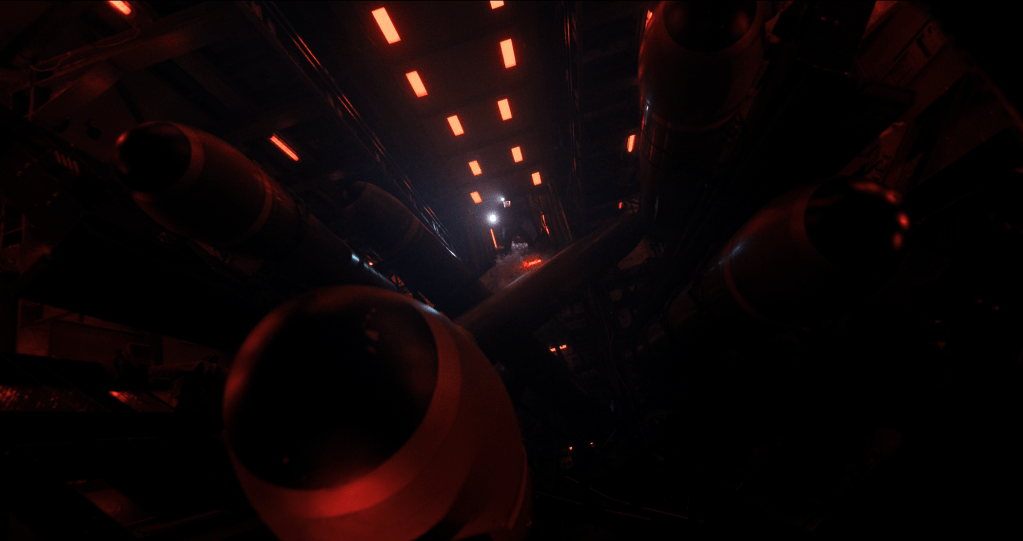
Despite all of this, the fact remains that a boring Mission: Impossible cannot be made, and the two action scenes are near the top of the franchise’s best; maybe even two of the best set pieces ever caught on camera. The silent, claustrophobic, weirdly beautiful submarine sequence gives me chills, and the jaw-dropping, stomach-churning biplane madness practically cements the existence of Cruise’s rumored death wish. Though a redux of Fallout’s superior ending, it does somehow manage to make Hunt’s survival even more improbable, pushing the envelope so far that you can’t help but laugh at the absurdity of it all (or Cruise’s underrated skill at physical comedy).
Which is telling, because Final Reckoning is a deeply silly movie best not taken too seriously. While I’m not attempting to give Hideo Kojima a backhanded compliment, the film’s sloppiness is strangely entertaining in the same way a Metal Gear game is: terrible title, abstruse but highly creative story, larger-than-life cornball do-gooders with ridiculous plot armor, and a disarmingly juvenile sense of humor. But, most importantly, both are prone to remarkably earnest attempts at sentimentality. Despite all of the complaints I’ve just listed, the ending and Luther’s voiceover snatched the film from being a failure for me at the very last second when I first saw it last summer.

Because while this is the most ridiculous and over-the-top Mission yet, Final Reckoning still clings to the idea that Ethan is just a person, not driven by fate or luck but rather (in)human motivation. And even though there is some light retconning of previous films, McQ stops short of offering a grand reason why Ethan cannot die. Luther’s monologue at the end about how we write our own stories and that nothing is ever set in stone is a fitting cap for a series that never stopped to think about the future too hard, but it’s also the philosophy of its protagonist distilled. We will the future into being through action. That’s what these movies have always been about: action. Doing something when the situation seems, dare I say, impossible. Somehow, however briefly, it’s a moment so perfect that I really did get the fleeting sense that Hunt/Cruise had pulled something off one last time.
Which is, ironically, the sort of thing you can’t really manufacture from studio feedback. Even if The Final Reckoning is a giant mess, it’s a sincere mess, and an exciting one, and that is admirable. Success is only certain within the stories of these films. In the real world, even the best filmmakers that cinema has to offer can, and often do, still fall short. 03-28-26



 Story Over Thought
Leave a comment