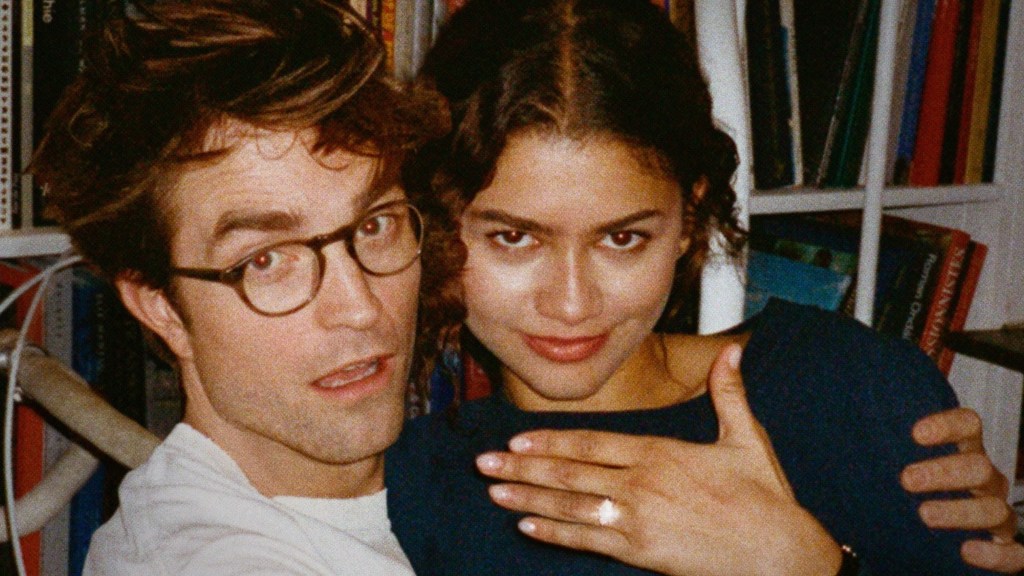
What’d the worst thing you’ve ever considered doing? Stealing a candy bar? Cheating on a test? Eating a baby?
The Drama, a strong contender for movie of the year thus far, asks this question both in earnest and sardonically. While certain things are far worse than others, most of us have considered or given more than a little thought to doing something “evil.” I always include spoilers on this blog, but fair warning, if you haven’t seen this film and still plan to, there is no turning back.
Ahead of their wedding, Emma (Zendaya) and Charlie (Robert Pattinson) have a drunken convo one night with friends. Each person takes turns sharing the worst thing they’ve ever done, as friends do. We learn that the best man, Mike, used his ex as a human shield against an attacking dog, maid of honor Rachel locked a mentally slow child in a closet overnight, and Charlie awkwardly shares that he once cyberbullied a kid, like really bad. Might have even made him cry. When the proverbial gun is pointed at Emma, she sheepishly admits that, as a teenager, she planned to shoot up her school. She even shares that the deafness in one of her ears is the result of practicing with firearms. While this admission is almost too horrible to believe, Emma doubles down, and the group stops just short of calling the cops on the spot. After some vicious words from Rachel, Emma and Charlie return home with their marriage on the rocks and a deep divide between them.
The Drama explores several things, and one angle examines how judgment is often purely performative. Detractors are right when they say this isn’t an especially layered take on why school shootings occur, but as a metaphor in a tremendously off-kilter rom-com, it’s used pretty skillfully. There is no perfect couple, and there is no perfect person with whom to spend the rest of your life. The Drama could be described as a film about a man who tries to convince himself he doesn’t love his fiancée because he’s told he shouldn’t. Take, for instance, how the insufferably passive-aggressive Rachel shows similar potential for callousness when describing how she locked a “slow” kid in a closet in the woods. She laughs about it, while Emma is regretful. Her act was random, while Emma’s stemmed from years as a social outcast.
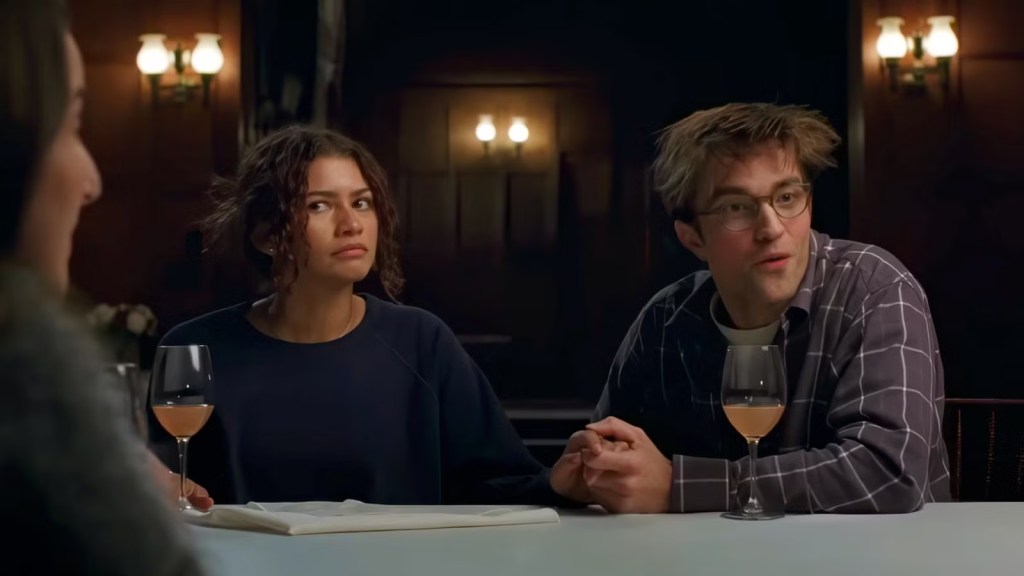
Of course, the two can’t actually be compared in good faith. Charlie tries to draw this parallel and is swiftly reminded that only one of these stories involved mass murder. The Drama puts you in a strange spot, since most of us will empathize with Emma but will also be a little scared of her. As a result, we spend most of our time with Charlie as he tries to make sense of it all, the clock ticking until the big day arrives. It all makes for juicy drama but also genuine hilarity. During a scene where the couple’s photographer describes “shooting” their entire extended family, Charlie imagines himself posing with 15-year-old Emma, rifle in hand.
The Drama is also a movie about how, from moment to moment, we’re all different people. Director Kristoffer Borgli and editor Joshua Raymond Lee reflect this idea in the film’s choppy rhythm, which cuts between laughter, fear, smiles, and frowns within the same relationship, the same scene, and often in the same conversation. A good relationship is built and rebuilt a thousand times over its course, but identity works the same way. Bad ideas of varying extremes tempt us all, and while some lie on the far, far end of the scale, simply letting go of them and starting over is preferable to the alternative. Emma was bullied and an outcast, and her adolescent brain wanted vengeance until she found a sense of community (which, humorously, came in the form of a gun control group at school). She is the same person and yet entirely different.
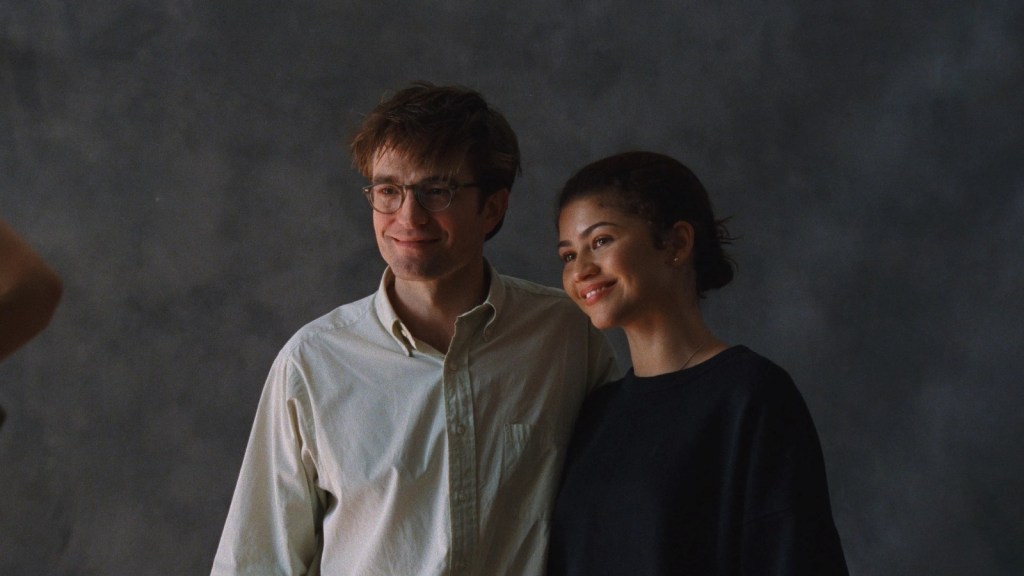
This is explored in Charlie as well, through a third-act plunge into infidelity that features another last-minute ceasefire. While some viewers might feel tempted to reiterate that cheating is hardly the same as killing several people, Borgli will nudge most towards the idea that the worst ideas originate from impulses, and all of us pick and choose the ones we embrace; Misha, Charlie’s coworker, tells him the she worst thing she ever did was cheat on her boyfriend and then proves open to screwing a scene later.
I don’t think any story is required to take a theme “seriously” or try to “change the conversation.” While school shootings are a uniquely terrible tragedy, and again, the film isn’t interested in the specifics of what might motivate such a horror (even mostly ignoring that perpetrators are overwhelmingly male), Emma’s dilemma is a mirror that you can probably project some sort of skeleton on. And, ultimately, her character simply didn’t go through with her heinous plan. That has to mean something. By the end, you might even feel a little angry that someone who didn’t actually do anything wrong could be so viciously berated by people who have.
The Drama is still a rom-com, and the film’s cathartic reconciliation is both sweet and sincere, as the two decide to literally burn it all down and start over. It’s a rare thing to ask the audience to rethink their concept of the human condition in a movie this funny, but in my opinion, Borgli tastefully pulls it off. Humor, heart, love, existentialism, it’s got it all. Skipping The Drama won’t be one of the worst things you’ll ever do, but it would be a mistake. 4-10-26



 Story Over Thought
Leave a comment