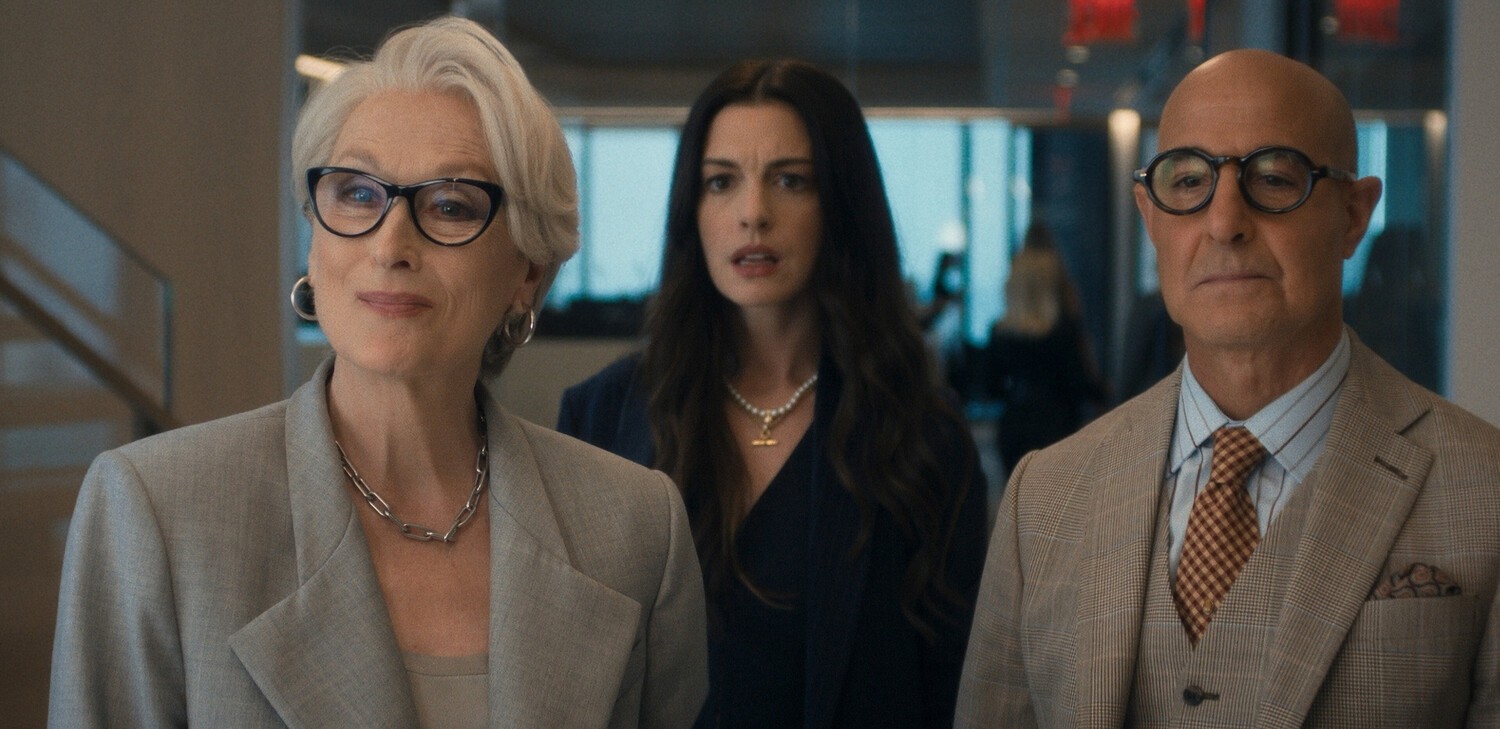
Anne Hathaway summer rolls on with The Devil Wears Prada 2. Having released six movies in the last five years, Hathaway will see at least five films grace the big screen in 2026. While David Lowery’s Mother Mary was hardly a hit (and I’ve yet to see it, despite my attempts to find a showing), she still has The Odyssey, David Robert Mitchell’s bizarre The End of Oak Street, and Verity with Dakota Johnson later in the year. Exciting times for Hathaway fans, especially since the most questionable one of the lot is, well, actually pretty good.
The film starts with Hathaway’s Andy being fired from her journalist gig via text, right before she walks onstage to receive an award. Some calls are made and some strings are pulled, and voila, she is reunited with the Devil herself at Runway magazine. Miranda (Meryl Streep)’s boss has hired Andy as the new features editor without her knowledge or consent, creating an uneasy alliance. With tensions high and pretty much everyone in a bad mood, Andy tries to fix Runway’s growing irrelevancy in the TikTok age, as well as prove her own worth.
I agree with fellow critics that the film has it a bit rough trying to squeeze so much sentimentality out of these monsters, even if the larger theme is that people like Miranda are stuck in the past and need to change. Am I supposed to feel bittersweet about the fact that someone with good taste has to hang their coat up and fly economy? You know, I’d offer that I have a sophisticated palette myself, and I have to brush my own teeth and drive my own car. It’s a hard life.

But Prada 2 is far from a soulless cash grab. David Frankel’s long-gestating sequel is an earnest love letter to tradition, scrappy hard work, and, of course, journalism, even if the fashion industry proves yet again to be a problematic angle from which to tackle these themes. Even a lowly critic like me can relate to the ever-increasing disappearance and degradation of respected outlets, and the film is also willing to suggest sins of the past may have helped usher in this “content” apocalypse, a genuinely interesting idea, even if the twist behind it all is a bit silly and quickly proves devoid of consequences.
I would have really admired the film if the ending hadn’t fumbled so hard. Things end with fifteen minutes straight of making sure every subplot is wrapped up in a mawkish bow (including the awkward romance with Patrick Brammall’s Peter, who is listed twelfth on Wikipedia’s cast list). And all of the “antagonists” are redeemed—except the tech bro losers, apparently the one link in the corporate chain that actually, unironically, has foul intentions at heart. What a convenient line to draw…
I guess I’m of two minds, but TDWP2 is a very watchable legacy sequel, one of the better ones, and has its priorities in the right place for the majority of the runtime. I’ll level with you: I watched this movie mostly for Hathaway and Emily Blunt, and both were superb, so that’s all I really wanted to begin with. If we have to keep turning every film ever made into a franchise, take notes from The Devil Wears Prada 2. 5-9-26


Leave a Reply