If modern video game adaptations have taught us anything, it’s that “the best video game movie ever made” is an oxymoron; it seems borderline impossible to cram the lore, locations, and plot of a fifty+ hour experience into something both comprehensible and, crucially, faithful to the original. Many films wave the faithful flag by cloning storylines or checking off beats detailed in a Wikia, but that rarely creates an experience that inspires its own fanbase—the ideal outcome for bringing a franchise to the big screen.
Like most films in the franchise, Zach Cregger’s Resident Evil reboot doesn’t directly retell any of the games. It doesn’t feature characters you’ve already met on console, and its status as an adaptation is, frankly, tenuous. But if that sounds like Hollywood’s vintage instinct to strip the most unique things from a property wrapping its slimy tendrils around your favorite action-horror IP, it shouldn’t. Cregger’s film is not just the leanest and meanest horror film of the year, but one that truly captures what it feels like to pick up a controller and navigate the blood-drenched, now freshly snow-capped Raccoon City.
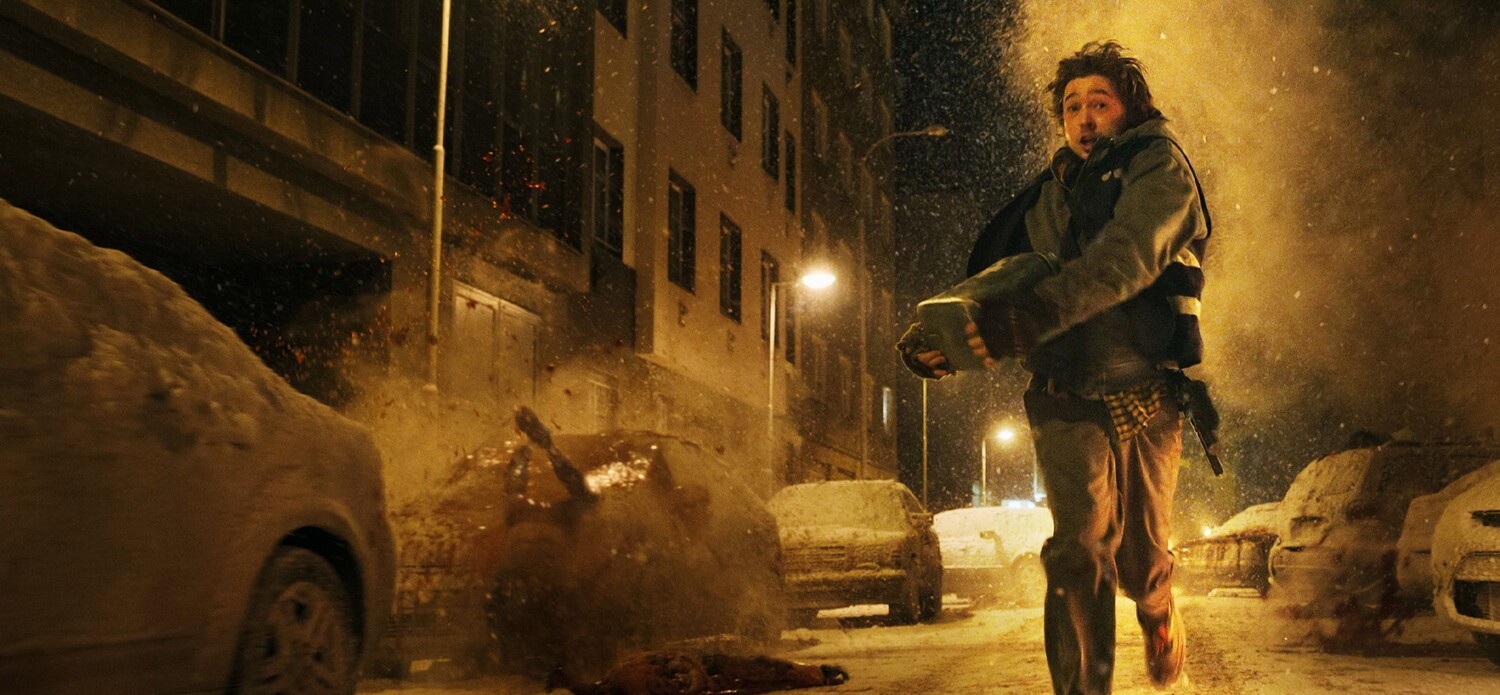
Following the screenwriting coda “get in late and get out early” to tremendous effect, Cregger’s film begins with medical courier Bryan (Austin Abrams) taking one last job while arguing with his pregnant girlfriend over the phone. Both relationship woes and icy roads take a backseat when he hits a woman who runs out in front of his car, but while attempting to drive her mangled body back to the hospital, he realizes she’s infected with a zombie-like disease that’s extremely contagious and quickly spreading. This complication will only be the first in what becomes a rough night for our foul-mouthed protagonist, which is, of course, excellent news for horror fans.

Continuing to hone his distinctive blend of horror comedy, Cregger’s (Barbarian, Weapons) film is laugh-out-loud funny—frequently at the expense of Bryan, who is the type of incompetent screw up whose life might be documented in a Resident Evil journal collectible. Much like the games, shells are missing from the gun that’s found on the mantle and must be searched for separately. Keys for a gate remain similarly hard to find (“What’s with all these padlocks?”), and the quickest way forward is always blocked off or concealing another diversion, usually of the Evil Dead variety. Within these diversions, Cregger keeps finding new “levels” to explore, from a secluded farmhouse hiding a monstrous dog to a grotesque drain filled with rats. It’s in these early detours, more than the film’s overt references to gaming, that Cregger most effectively captures the feel of Resident Evil. More self-aware nods to its nature as an adaptation only received tepid chuckles from my 4DX audience, and the third act’s more overt silliness, though far more focused and less spectacle-driven than most, is goofy to diminshing returns.
Still, most of the DNA here more closely resembles an approach from yesteryear. Like a Carpenter flick, Cregger takes an uncomplicated genre premise and lets it curdle in real time, building the horror around an ordinary protagonist through escalating set pieces and a simple script. Abrams’ everyman self-deprecation suits a character who gets shoved face-first into the nastiest elements imaginable, from mud to sewage to a literal delivery room filled with blood. It’s no accident that this new father discovers he’s been tasked with delivering a cure—“life itself,” as it’s called—to the top of Umbrella Corp, from which an antidote might be derived.
Resident Evil, much like Exit 8 a few months ago, is explicitly about the fear of bringing life into a world that’s already left its protagonist disillusioned. Bryan’s attempts to distance himself from the responsibilities of fatherhood parallel nicely with the nightmare he’s forced to confront during his odyssey to the tower, and another late-film phone call does some hefty lifting in the characterization department. In typically mean-spirited fashion, however, a climactic conjoining of flesh (one reminiscent of Playdead’s INSIDE, another game that explores birth and identity) creates something a bit further from holy, and any gorehounds finding themselves in the audience will leave satisfied.
Like Exit 8, Cregger’s Resident Evil builds something new on the shoulders of the source, using the game’s feel and tone to create a story that’s fresh and original but still reminiscent of the IP slapped on the poster. For Leon Kennedy diehards, that might be disappointing. For everyone else, it points to a union between film and video games that’s more promising than ever: a world where the strengths of both can live in harmony. Wild, chaotic, horrifying harmony. Here’s to new beginnings. 9-18-26


Leave a Reply