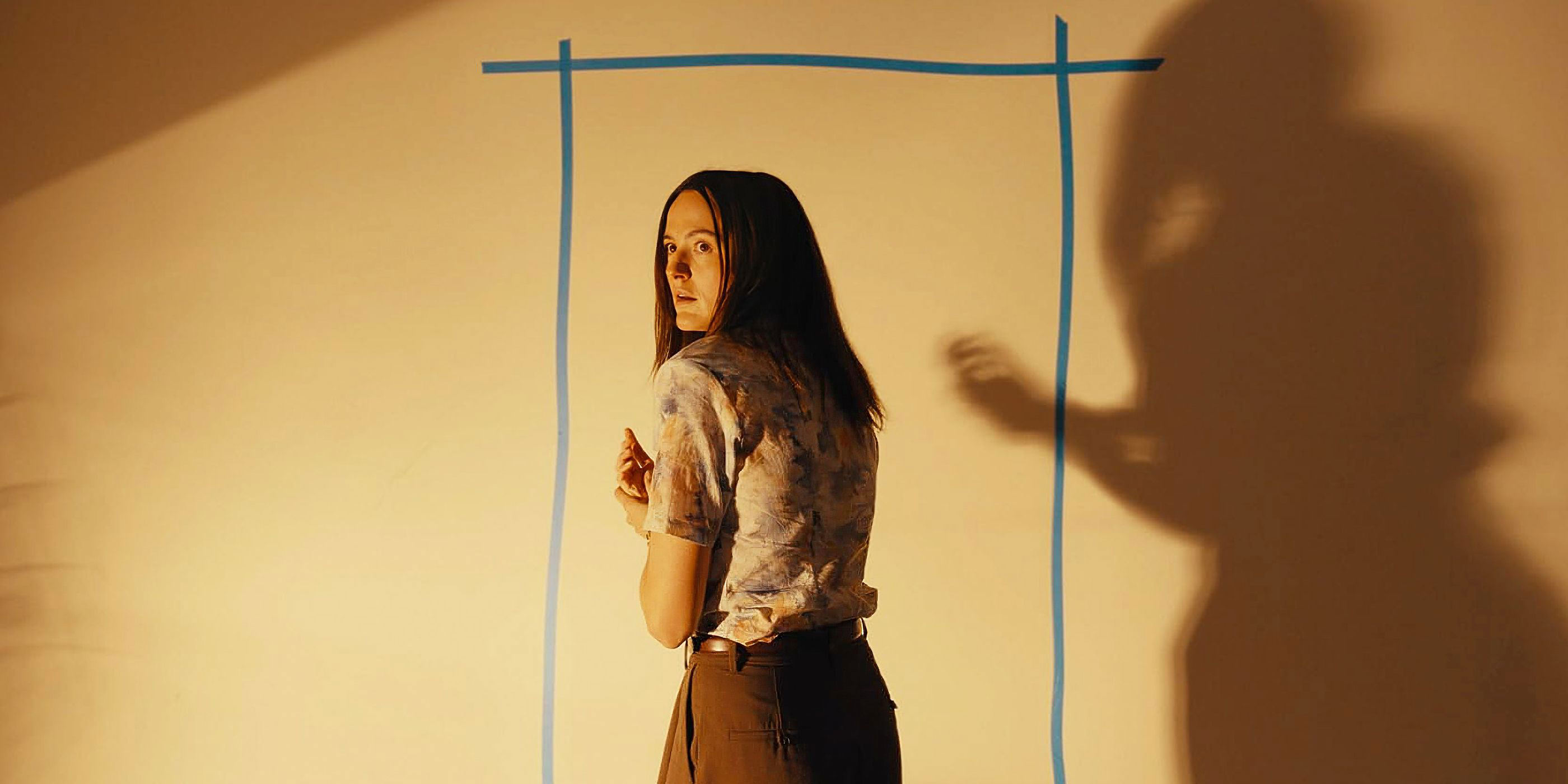
No reason to be coy; I didn’t really care for the first half of Backrooms. The protagonist is weirdly unlikable, the script is pared down to the bone, and even the backrooms themselves don’t seem very frightening. I watched the film at a Thursday night showing that was nearly full, and the frequent use of silence made it easier to hear the occasional yawn early on.
Director Kane Parsons (20 years old, btw), creator of the viral Backrooms series, can’t be blamed or credited for the script, a duty handed off to Westworld‘s Will Soodik. And while the screenplay is what’s being propped up as the weakest link here (perhaps for good reason), it does manage to, ultimately, explore the scariest space any film could: the limitless mystery of the human mind. Despite seeming like a surface-level trip for a little while, Backrooms ends up packing a dizzying punch.
Hotheaded Clark (Chiwetel Ejiofor) is living at his furniture store and sleeping on the showroom, having been kicked out by his ex-wife after one too many drunken arguments. His angelic therapist, Mary (Renate Reinsve), tries to help him understand that anger isn’t inherently bad. The two engage in roleplay in a scene towards the beginning, with Clark lashing out in a vitriolic rant at his ex-wife: he pays for everything, he works nonstop, so why is he the one who’s unhappy? Mary comforts Clark and assures him it’s a valid response, but it’s our first clue that Clark doesn’t exactly possess the boy scout nature of a Dale Cooper.
Clark swears angrily when the lights flicker, and he throws a fit while filming a cornball advertisement for his store. Once Backrooms starts to more resemble a Lynch film, these implications become the text. Clark discovers a vast, eerie series of yellow rooms behind an invisible portal in the store’s basement, filled with bizarre architecture and, oddly, furniture. He snaps at Mary when she doesn’t believe him (“For a shrink, you’ve got a terrible poker face!”) and drags employees Bobby and Kat into the titular rooms so they can help him explore. That’s the thing, if you haven’t noticed — Clark loves the Backrooms, and he pays little mind to the danger it presents to himself or anyone else.
Being totally unfamiliar with Parsons’ series or the “franchise” at all, I wrote in a trailer breakdown a while back that the liminal horror I’ve seen (such as Skinamarink) often uses nostalgia and the past as fuel for its brain-melting mystery. And while that’s certainly present in Backrooms (more on that later), it also uses the central conceit as a stage for exploring mental health.
Like, well, most modern horror films. For some, this trip down trauma lane will be annoying, since trauma seems to be the end-all, be-all of storytelling these days, and Parsons (along with Curry Barker and Zach Cregger) is “supposed” to be ushering in a new wave of horror. But as Clark himself notes, he’s not “lonely”; he’s just alone. And there’s a difference.
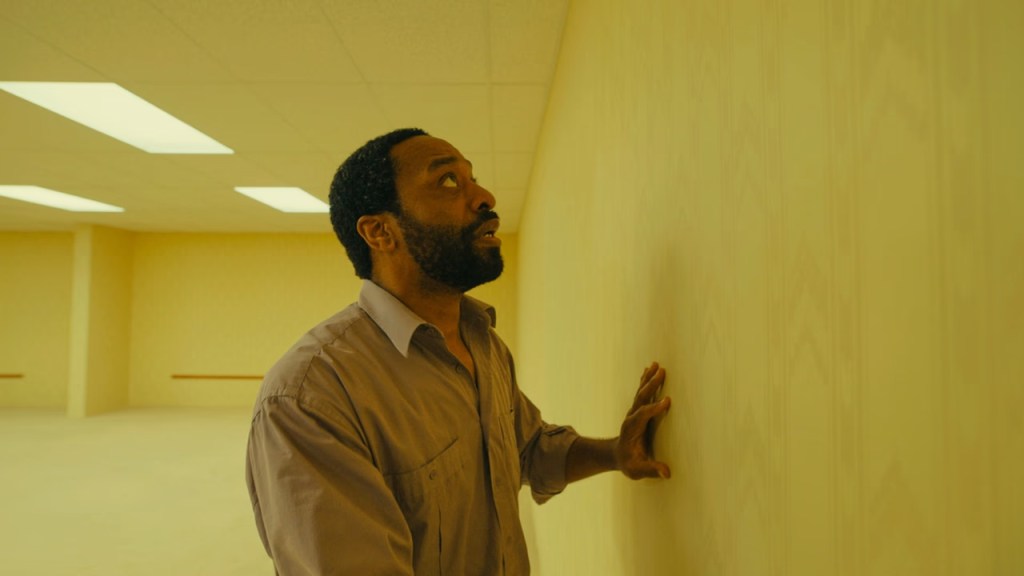
If depersonalization is the truly endless, unnavigable maze that Clark is lost in, where’s the exit? That’s where Backrooms says something new, or at least, something old in a new way. There is a strange beauty to the terror, that unsettling yet alluring feeling of being somewhere outside of space and time, alone yet surrounded by places and things that are not quite alive. Like retreating into the comfort of memories, as literalized by the copies of humans this strange dimension makes. The backrooms are overtly metaphorical here, and while it’s true that some will cry foul at the A24-ification of Parsons’ big screen version, it’s an addition I enjoyed. Especially given the monotony of the first half. It’s a unique way to employ this concept, and the bait-and-switch gives the story much-needed momentum.
That’s another aspect that makes Backrooms interesting — Mary is the true protagonist. She traverses to the storeroom herself in the third act and finds the portal in the basement. Clark captures and forces her to recreate their roleplay, all the while surrounded by uncanny doubles whose faces have an extra nose or a wayward ear, and that’s if they don’t outright resemble Clayface himself. Lynch really would be proud.
When Mary snaps, expressing her own repressed contempt, she’s really speaking to her mother. Her mom is revealed to have suffered from a mental illness of her own, locking her child up inside their home and forbidding her to leave. (In a flashback, their home resembles the dingier backrooms Bobby finds, with dirty laundry aplenty.) It’s another thread for which this concept proves a perfect match. Life in the 2020s is now a copy of a copy of a copy (literally, when discussing the rampant use of artificial intelligence — another parallel that could be drawn here), and yet we don’t seem to understand how to treat each other any better than we once did.
Consider how the backrooms are filled with dilapidated furniture, something closely associated with home and safety, that’s been abandoned. Or how dead birds are used to signify this area’s environmental toxicity. Or how the only voice present is in a foreign language, playing on a loop. If this all represents the reality of adulthood, must our children be doomed to wander the same hellish maze? It’s deliciously ironic that the monster version of Clark resembles the pirate costume he used for ads, since it’s a map that he so desperately needs. Parsons, having grown up in the 2010s, has made a film about how figures of authority have left many young people disillusioned and lost in nostalgia for a time when their memories didn’t have to make sense at all. Mary wants to “fix” the past by fixing Clark, but Clark doesn’t want to be fixed, as he admits at the film’s emotional climax.

It all fits together a little too well, and a specific tool from Mary’s childhood returns in an incredibly cliché way. But Parsons elevates the less inspiring sections of the script with the visual flair that first made him famous. I imagine the budget of an A24 production is a hell of a lot more than whatever he used for the Blender shorts on YouTube, but since I haven’t seen them, I can’t say for sure whether Backrooms is more or less scary. It’s probably close. A couple of these sequences work against intent by going on for so long and foregoing the found footage, but there are three or four moments that will make the hair on the back of your head stand up — special shout-out to the Christmas tree scene.
Backrooms isn’t a perfect film. But it is, impressively, a polished one. It looks great, tells an interesting story, and both Ejiofor and Reinsve deliver strong performances that add further sophistication. Despite some early hiccups, there’s a sickening unreality to it all that, though not pushed as far as it could be, sticks with you by the end. Forget playing it safe — I say we go back and continue exploring this world. Surely a voice this young will have more to say. 5-30-26


Leave a Reply